

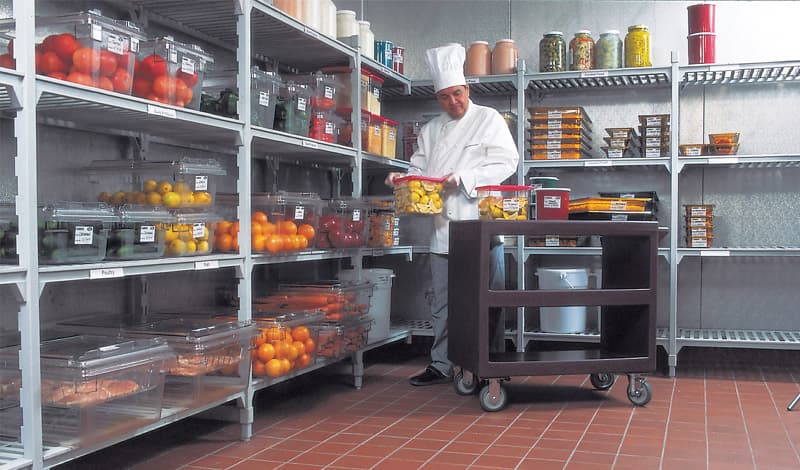
Feeding a crew on a remote construction or mining site is a logistical exercise most people never see. Long distances from town, extreme heat, and shifting crew numbers all make food safety harder to manage than it looks from the outside — and cold storage sits right at the centre of that challenge.
Catering teams servicing these sites don’t get the luxury of a fixed commercial kitchen down the road. Everything, from raw ingredients to prepared meals, has to survive the trip out, hold safely on-site, and stay within temperature well past when a suburban kitchen would have already served it.
Why Remote Catering Runs on Tighter Margins for Error
In a metro kitchen, a fridge fault is an inconvenience. On a remote site two or three hours from the nearest large centre, it’s a genuine operational crisis. There’s no popping down the road for a replacement unit or an emergency top-up of stock.
WA’s climate adds another layer of difficulty. Ambient temperatures on many inland and northern sites regularly sit well above the range where perishable stock can be left exposed, even briefly, without real spoilage risk. Add in dust, vibration from heavy machinery, and inconsistent power supply, and it’s easy to see why standard kitchen fridges rarely last long in these conditions, making commercial refrigeration systems designed for demanding environments a far more reliable long-term solution.
Typical challenges catering contractors face include:
- Crew numbers that fluctuate week to week depending on the project stage
- Long supply runs that mean stock has to last longer between deliveries
- Extreme ambient heat that puts constant pressure on refrigeration capacity
- Sites with limited or no existing cold storage infrastructure
Purpose-Built Cold Storage for Sites With Nothing in Place
Most remote sites start with nothing more than a demountable kitchen and a couple of domestic-grade fridges — nowhere near enough for feeding a full crew safely over weeks or months. This is where dedicated units purpose-built for harsh conditions make the difference between a kitchen that copes and one that doesn’t.
A properly insulated freezer room hire Perth setup gives catering operators the buffer stock capacity they actually need, holding bulk meat, frozen produce, and pre-prepared meals at safe temperatures regardless of how brutal the conditions are outside. For contractors bidding on remote work, having this kind of infrastructure sorted before mobilisation avoids a scramble once the crew is already on-site and hungry.
Scaling Storage Up and Down With the Project
Remote projects rarely run at a constant size. A camp might start with twenty workers and scale to two hundred within a few months, then wind back down again as the project moves through its phases. Fixed catering infrastructure struggles to keep up with that kind of variability.
Flexible cold storage solves this neatly. Rather than over-building for peak capacity from day one, or under-building and constantly running short, contractors are increasingly turning to cool rooms for hire Perth arrangements that scale in line with the actual crew count on any given rotation. It means the catering operation matches the project reality, rather than the other way around.
Mobility Matters as Much as Capacity
Beyond raw storage volume, remote and multi-site catering operations need equipment that can actually move with the work. Projects shift camp locations, sites get decommissioned and relocated, and rigid infrastructure that can’t follow the crew quickly becomes dead weight.
This is where mobility becomes just as important as capacity. Catering contractors covering several active sites, or servicing short-term camps that wind up within weeks, benefit enormously from mobile cool room hire Perth options that can be relocated as project needs change. It removes the pressure of committing cold storage assets to a single location for the life of a contract that may only run a fraction of that time.
Planning Cold Storage Around the Realities of Remote Work
The catering operators who handle remote and site-based work well tend to plan cold storage the same way they plan crew rosters and supply runs — around variability, not a fixed assumption of how things will stay. They build in buffer capacity for extreme heat days, factor in longer lead times for equipment relocation, and treat refrigeration as core project infrastructure rather than an afterthought bolted on once the kitchen’s already running.
Getting that planning right from the outset saves a lot of pain later. It means fewer emergency calls when a fridge fails two hundred kilometres from the nearest depot, and it means the catering team can actually focus on feeding the crew well, rather than firefighting equipment problems in 40-degree heat.
As WA’s resources and construction sectors continue moving crews across increasingly remote and variable-scale projects, the operators treating cold storage as flexible, purpose-built infrastructure — rather than a fixed kitchen fitout — are the ones best placed to keep food safe wherever the work takes them.
Comments are closed.